 Ultimate guide
Insuring Historic Homes in Rochester NY: Costs and Coverage
Last Updated: October 31, 2026
Quick Summary
Insuring historic homes in Rochester NY differs from insuring newer houses because older properties are rarely replaceable with like materials at a like price. Standard policies built around modern construction can leave a gap between what the insurer pays and what it takes to rebuild. Estimating true rebuild cost is the key first step.
- Hand-cut wood trim, plaster walls, slate roofing and original masonry cost more to reproduce than modern materials.
- Older wiring, original windows and aging plumbing affect both risk profile and claim cost.
- Independent agencies can compare coverage across carriers, since not every insurer writes historic construction.
- Set dwelling limits by rebuild cost, not sale price or assessed value, to avoid being underinsured.
- Ask a professional about eligibility before buying, since some insurers structure older-home coverage differently.
Table of Contents
Insuring historic homes in Rochester NY is not the same as insuring a house built in the last few decades. Standard homeowners policies are written around modern construction, modern materials and modern replacement costs, and older homes often fall outside those assumptions. This guide explains where those differences show up, how to estimate coverage that actually fits an older property, and what to expect when you shop for a policy.
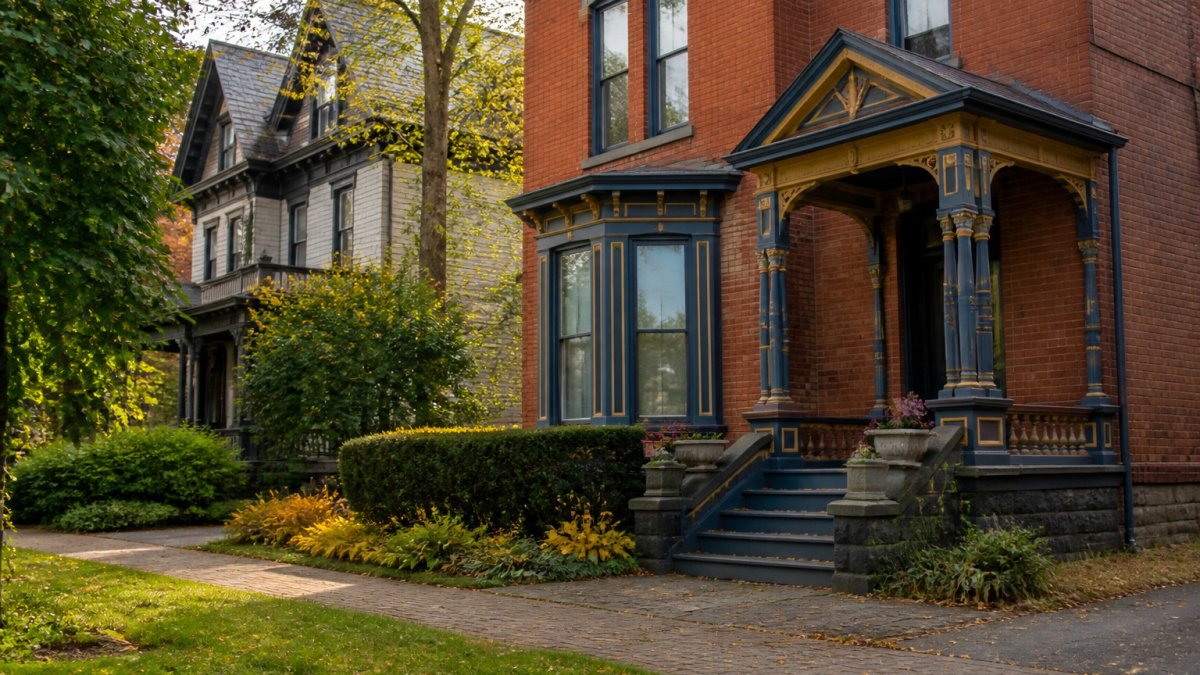
The core issue is that older homes are rarely replaceable with like materials at a like price. Hand-cut wood trim, plaster walls, slate roofing and original masonry cost more to reproduce than the materials used in a typical new build. You can get an online insurance quote to see how these factors affect your premium. A policy that assumes conventional construction can leave a gap between what the insurer pays and what it actually takes to rebuild.
Historic homes also tend to have systems and features that generic underwriting questions do not capture well. Older wiring, original windows, aging plumbing and unique architectural details all affect both the risk profile and the cost of a claim. That is why many homeowners with older properties find that a policy written around a standard template does not fit the house.
Independent agencies can compare coverage across carriers rather than offering a single company's product. You can learn more about our agency and how we approach our work. You can request a free home insurance quote for your property directly from the agency. For homeowners in Rochester with older properties, that matters because not every insurer is willing to write policies for historic construction, and those that do may structure coverage differently.
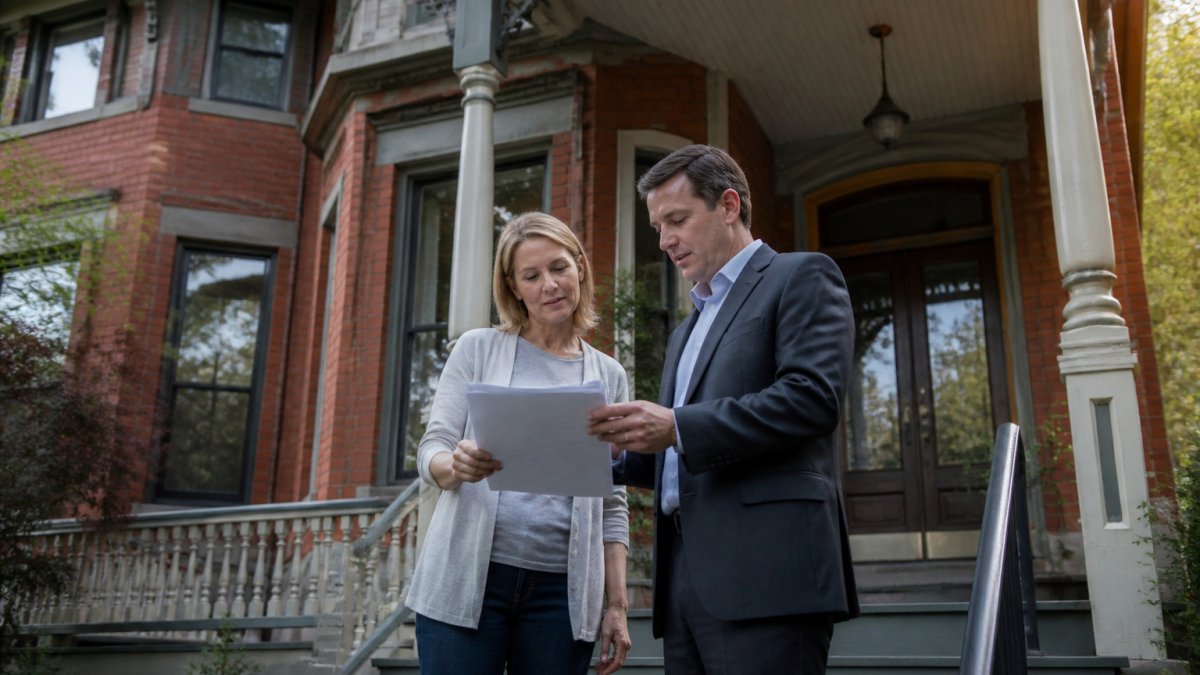
A homeowner standing on the front porch of a late-1800s brick house, reviewing paperwork with an insurance agent, illustrates the kind of conversation worth having before you buy.
Before you can compare policies, it helps to understand the building itself. If you are unsure whether your older home will qualify, you can book a free consultation with an insurance professional. The sections that follow cover how to estimate replacement cost, how replacement cost differs from actual cash value, how wiring and property condition affect eligibility, and which exclusions and endorsements to ask about. Each one connects back to a practical question: what would it cost to put your home back the way it was after a loss?
Standard homeowners insurance information is a good starting point. Our general home insurance information page covers the basics of dwelling, personal property and liability coverage, which are the foundation any older-home policy is built on.
Watch out: a policy that lists a dwelling limit based on the sale price or assessed value rather than rebuild cost can leave you underinsured after a major loss on an older house.
Frequently Asked Questions
Why is historic home insurance more expensive than standard homeowners insurance?
Historic homes often cost more to insure because rebuilding them requires period-appropriate materials, skilled craftsmanship, and sometimes specialized labor that is harder to source. Older systems such as wiring, plumbing, and heating may also raise underwriting concerns. Insurers price this added risk and repair complexity into the premium.
What is the difference between replacement cost and actual cash value for older homes?
Replacement cost coverage pays to rebuild or repair your home using similar materials at today's prices, without subtracting depreciation. Actual cash value subtracts depreciation for age and wear, which can leave a large gap for a century-old house. For historic properties, replacement cost is usually the safer choice, but it is important to confirm the policy language and any limits that apply to specialized materials before you buy.
Does my historic home qualify for specialized insurance coverage?
Eligibility depends on the age of the home, its condition, and the status of its major systems such as the roof, electrical, plumbing, and heating. Some standard carriers decline homes built before a certain era or with outdated wiring, while others write them with conditions such as inspections or upgrades. Providing a recent home inspection, photos, and records of updates helps underwriters evaluate your property accurately and can widen your options.
How do I calculate the replacement cost of a home with historic architectural features?
Start with the home's square footage and the cost per square foot to rebuild a comparable structure in your area, then adjust for features such as hand-carved trim, slate roofing, leaded glass, or plaster walls. Obtaining a professional reconstruction estimate from a contractor familiar with older homes is the most reliable method. Your agent can then check whether the dwelling limit in your policy matches that figure.
Are there specific insurance considerations for homes in local historic districts?
Homes in designated historic districts may face renovation rules that affect how repairs must be done after a loss, which can raise rebuild costs. Confirm whether your policy includes coverage for code upgrades or preservation requirements, since standard policies often exclude them unless an endorsement is added. Reviewing these details before a claim occurs is far easier than discovering gaps afterward.
How can Hamilton Horizons help me find affordable coverage for my older home?
Hamilton Horizons is an independent insurance agency in Rochester that compares policies from multiple carriers rather than selling a single company's product. Pricing depends on your property, coverage choices, and claims history, so the most accurate way to see your costs is to request a quote directly from our office.
Note: this draft is shown as a partial preview of the full article. The remaining sections (replacement cost calculation, actual cash value, knob and tube wiring, underwriting, exclusions, pricing, provider comparison and the quote section) follow the outline and will be written in the same style.