 How-to
How to Prepare for an Insurance Policy Review Meeting
Last Updated: November 18, 2026
Quick Summary
To prepare for an insurance policy review meeting, gather every declarations page, policy form, premium bill and claims history into one packet, then bring a written list of questions. Review limits, deductibles and exclusions first, and follow up in writing within two days.
- Collect the declarations page, full policy form, premium bill and endorsements for each policy.
- Highlight the dwelling or liability limit and the deductible before the meeting.
- Ask whether your limits still match current replacement costs and how that was calculated.
- Request any recommendation in writing with its cost attached.
- Send a follow-up email within two days to confirm the changes agreed on.
Table of Contents
- Gather and Organize Your Policy Documents Before the Meeting
- Questions to Ask Your Agent During the Insurance Policy Review
- Use This Insurance Policy Review Meeting Template and Sample Follow-Up Plan
- Frequently Asked Questions
How to prepare for an insurance policy review meeting comes down to three things: gathering your paperwork, knowing what to ask, and deciding what to do afterward. Preparation usually matters more than the meeting itself. A short, organized review can catch coverage gaps, outdated limits and household changes nobody has noticed.
Your policy review is a chance to make sure your coverage still matches your life. Most people only read their declarations page once, when they buy the policy. The Insurance Information Institute's consumer guide to insurance explains the basic parts of a policy, which is a useful starting point before you sit down.
Gather and Organize Your Policy Documents Before the Meeting
A good review starts with a single packet you can walk through line by line. If a document is missing, you can contact your carrier directly through the customer service portal to request it. Collect these items for every policy you hold:
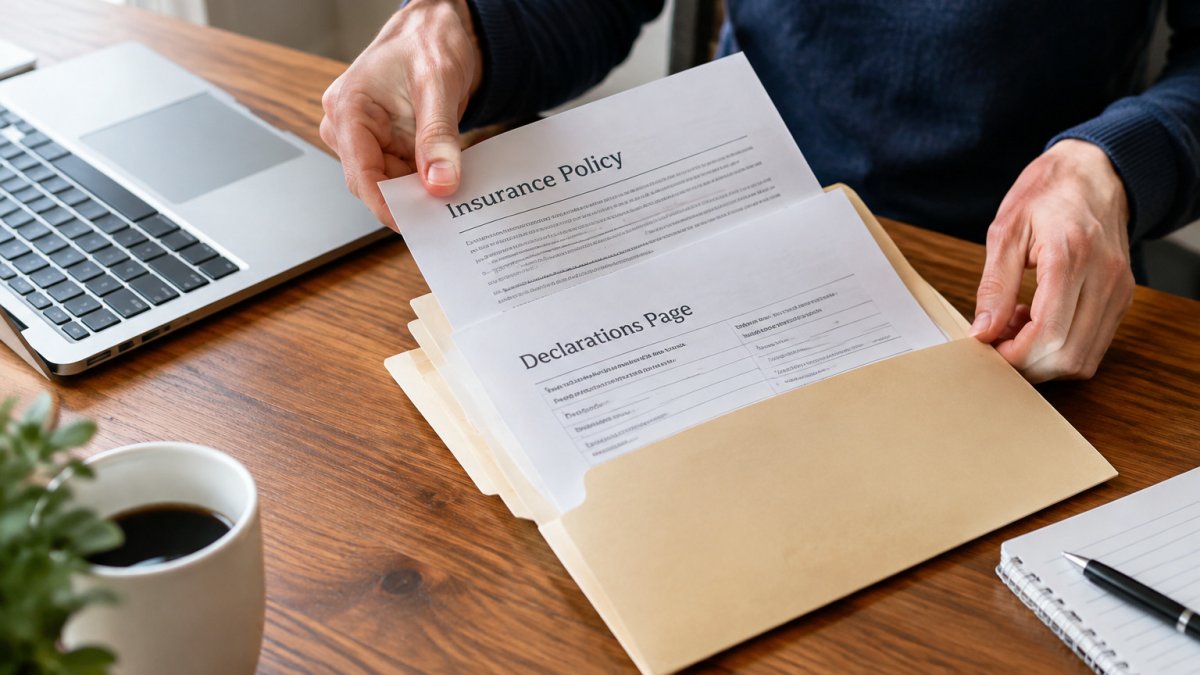
- The current declarations page for each policy, showing named insureds, policy numbers, effective dates, limits and deductibles.
- The full policy form, with exclusions and conditions, plus your most recent premium bill, renewal notice and endorsement pages.
- A written inventory of vehicles, property and valuables with purchase dates and replacement values, a claims history for the past three to five years, and any riders on life or disability policies with current beneficiary designations.
Watch out: if a declarations page is missing, do not guess at limits from memory; request a copy from your carrier or use your state insurance department's consumer resources to find the right contact, and confirm the effective date on whatever copy you receive, since an old declarations page can show limits that have already changed.
Before the meeting, skim each declarations page and highlight the dwelling or liability limit, the deductible, and any coverage that looks lower than expected. You can find the agency's downloadable forms and documents to help organize the packet.
The table below sums up the documents to collect and what each one shows.
| Document | What it shows | Check first |
|---|---|---|
| Declarations page | Named insureds, policy numbers, effective dates, limits and deductibles | Dwelling or liability limit and deductible |
| Full policy form | Exclusions and conditions | Exclusions and conditions |
| Premium bill and renewal notice | Current premium and any changes | Premium changes since last renewal |
| Endorsements | Changes added to the policy | Coverage that looks lower than expected |
| Asset inventory | Vehicles, property and valuables with replacement values | Purchase dates and replacement values |
| Claims history | Claims filed over the past three to five years | Past claims |
Questions to Ask Your Agent During the Insurance Policy Review
Bring a short written list to the meeting.
- Are my limits still aligned with current replacement costs, and how was that calculated?
- Which discounts am I eligible for but not receiving, and what documentation do you need?
- What changed since the last renewal, premium, deductible, endorsements or exclusions?
- Where are the gaps between my policy and my actual exposure, and what would closing each cost?
- If I file a claim, what is the process and what documentation will I need?
- How do deductibles interact with premiums if I raise the deductible?
- Are there exclusions I should know about, such as water backup, earth movement or business use of a home?
Ask for plain-English explanations of any term you do not recognize, such as "declarations page," "rider," "endorsement," "coinsurance" and "actual cash value versus replacement cost", each changes what a claim pays.
State your goal at the start of the conversation, and ask for any recommendation in writing with the cost attached.
If an answer is vague, "you're fully covered" without a limit or form reference, ask which policy form and limit line it refers to, and write it down so it can be confirmed in the follow-up.
Use This Insurance Policy Review Meeting Template and Sample Follow-Up Plan
Review Meeting Agenda
- Confirm current coverage on each policy
- Note any life changes
- Review deductibles and limits
- Agree on action items and a follow-up date
After the meeting, write down every action item, send a follow-up email within two days to confirm changes, and set a reminder for your next review. To schedule the review or ask follow-up questions, contact the agency directly. You can meet the agency staff to find the right person to continue the conversation.
Ready to review your coverage? Get a free insurance quote from Hamilton Horizons Insurance Agency Inc.
Frequently Asked Questions
What is an insurance policy review?
An insurance policy review is a scheduled meeting where you and your agent go over your current policies to confirm the coverage limits, deductibles, and discounts still fit your life. It usually covers auto, renters, homeowners, business, and life policies. The agent checks whether household changes, new property, or a different job have created coverage gaps. Most reviews also compare premiums so you can see whether you are paying more than necessary for the protection you actually need.
What should I bring to an insurance policy review meeting?
Bring your current declarations pages for each policy, a list of any vehicles, drivers, and household members, and a home inventory if you have one. Include recent renewal notices and any mid-term premium changes. If you own a business, bring your Business Owners Package and workers compensation details. Having these documents on hand lets the review focus on decisions rather than searching for paperwork during the meeting.
How often should I review my insurance policies?
Most people should review their insurance policies at least once a year, ideally before the renewal date. You should also schedule a review after major life events such as buying a home, getting married, starting a business, adding a teen driver, or making a large purchase. A short annual check-up helps catch coverage gaps and makes sure your liability protection and asset protection still match your situation.